
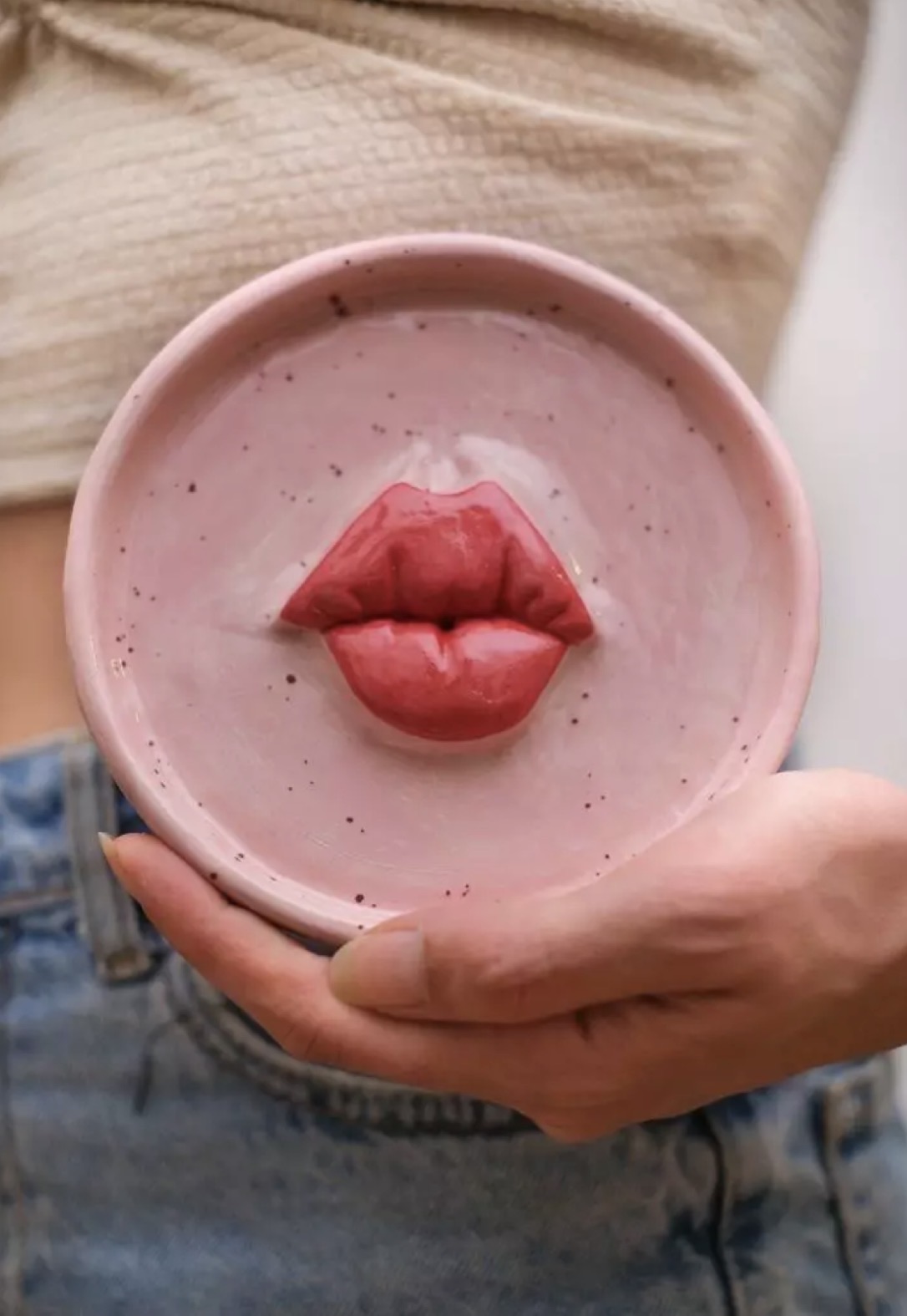
Colours have a major role to play when it comes to deciding your vibe or your mood. I usually associate myself with a more lilac-mauve-baby pink palette of late because of a few reasons:
A. I have (recently) found out these colours look romantic on me and I am a hardcore romantic.
B. I have hated anything pinkish/ orangish/ magenta ever since I had turned 12. I feel like now that I started liking the shades again, it makes me elated just imagining that I am lying on the floor with my windows open, sunrays coming in, birds chirping, my eyes are closed with my lips extending themselves as if I were smiling ear to ear--- nothing bad ever happened to me.
C. I have been told pinkish shades bring out the main character in me. I mean, my face lights up and I feel like I am in movie-- that sort of a thing. Now if I start feeling like that, my confidence obviously would be off the charts.
D. Another not- so significant reason is, since I have spent most of my life (teenage to late adulthood) hating the colour and not wearing it quite often, whenever I put anything on with the associated shades, it is like I am a different person walking amidst human civilisation. Apart from the fact that there are a few creepy stares here and there, I have witnessed people wanting to be nicer whenever I don the shades.
I never realised that my dislike for the shade was because I was brainwashed into believing that softness means unusually vulnerable. As if being soft is a curse or something. But when I started to reevaluate everything in life, starting from decisions I took in my career or maybe opting to spend my time doing something I loved, a new hobby or perhaps picking up items from the marketplace, I came to conclusion that in no way it was a matter of happiness or excitement when people called me weak. That disdain influenced my habits in life later on, my perspectives on people and how I built a wall around me because I felt that being soft is like being exposed.
Nobody likes to be weak, delicate, fragile or the like, both mentally and physically. I was not a very strong kid growing up, incredibly meek and timid you could say. And that was a worry for many people in the family because my personality did not match the professions I said I wanted to be in. I think human civilisation somehow forgets (more often than not) that growth is an aspect of the natural order. Evolution, change--- these are inevitable. We see it all the time-- people changing with experiences, those who undergo severe trauma and then rise like a phoenix from the ashes.
Society looks at softness as helpless. It does not acknowledge the idea that to be soft, it takes a certain amount of courage. It is the same idea applied to women that since they are physiologically less stronger they are prone to atrocities. It is not a false notion but if you consider childbirth, I guess women are stronger and when it comes to mental strength, women are outdoing men currently.
I feel like all of this began when at the turn of the current millennium, it was cool to be 'different'. Being girly was labelled as not noticeable because everyone wore the same kind of clothes, hairclips, shoes, etc. Pink was the colour of the girls. Anyone who liked pink was a typical girl. And I don't think there is a problem in that. Being a part of a gang is really cool and all. The problem begins when the need to rebel stops you from thinking you can be a part of a gang too. Even when you have a different personality.
The exact opposite of the girly girls were the punk rock/ biker chicks or goth enthusiasts who represented the colour black. They had edge with their funky hairstyles, heavily kohled eyes, visible liners, black nail paint, leather jackets, striped knee length socks and a fascination for Avril Lavigne. She was the torchbearer of the hep- culture as we stepped into the new millennium. And because she was different, she became an idol for those who did not fit in anywhere. Girls lined up where hair straightener was found, pocket money all spent on liners and nailpaints-- you know the drill.
Most of the girls mentioned above were not rebels with a cause-- they were trying to make a statement. They were willing to be seen for being different-- they were not scared of judgement. In fact, when someone commented on their choices of clothes or hairdo, it was a matter of pride for them that someone noticed them. Later, they had their own quiet periods wherein they completely shut themselves in and rebelling in different ways-- like finding cheap stuff to smoke or drinking local beer.
I don't blame them for being different or trying to show off that they were built different than the ones who were on the pink side of things. Some children (when they are fresh teenagers) feel threatened when they are not like the popular kids, or the kids that teachers always admire, sometimes going on to the extent of holding their notebooks up for the class to see or the extra- curriculars only being open to the stage- smart ones. Nobody likes to be invisible. All those movies that were made, books that were written about girls getting a makeover and then boys swarming up to get their numbers and stuff-- all of these were suggestive of the fact that if you are not girly, you will never have any of these experiences. The regular makeup won't look good on you neither you will be a part of the usual crowd. For a while, being different did make all the difference because now the rocker chicks had fans and admirers for being 'cool'.
That phase gets over one day. You come to terms with the fact that there are more ways to make a statement than to be extreme.
But why is it said that healing makes you like pink?
Because when you start choosing softness over valorising hardship, you allow yourself to be normal. You do not glorify hardship. Pink is only a metaphor for choosing softness, as this kind of softness is not indicating that to be known as a strong person you have to suffer more. I do believe that pain makes you stronger but there are certain things that children should not go through. And of the many things I have a problem with-- I have a problem with the conventional education system where there is no mercy if you fail.
Some people have the capacity to work harder because they have help. Really, they do have help. Some don't. Both cases are fine. Some people do it alone because they had no option. Some asked for help so they got it. Asking for help is also labelled as weakness and I envy those who can ask for help easily. They are the ones who have no qualms admitting to the fact that they are not perfect at something. The ones who could do with some help but refuse to accept any operate from a psychological misjudgement because they learned it from somewhere that 'you should have it figured out by yourself'. These people are also the ones who turn people away when they ask of some complex stuff because, again, in their heads, the narrative goes like, "I figured out so you should try too." I can't vouch for everyone but mostly I have seen in the cases of parents who were toxic. When someone asked them if they are leaving any significant amount of money for their kids or some will, they simply say, "My father did not leave me anything so why should I?"
Whether you like pink or black, either way you are a human being. Anybody who tries to sell off an idea to you by saying ABC will make you look powerful, etc. are lying to you. Real strength is never external, it is what goes on the inside when adversity knocks at your door.
Comments
Post a Comment